

Many people in the modern world read the Bible incorrectly.
They’ll whip it out, point to a random page, and read whatever’s there, thinking “This is what God’s got for me today.”
Or they’ll jump into a “Bible in a year” plan without understanding why.
Others encounter liberal scholars online and accept their interpretations without question.
There are many ways to read the Bible, but not all give God’s word its proper due.
So here are seven steps to reading the Bible properly—the way historic Christians have read it. This isn’t about in-depth study (that’s a separate topic). This is about big-picture reading that helps you walk away with a clear understanding of what a passage, chapter, or entire book is actually saying.
Let’s take a look.
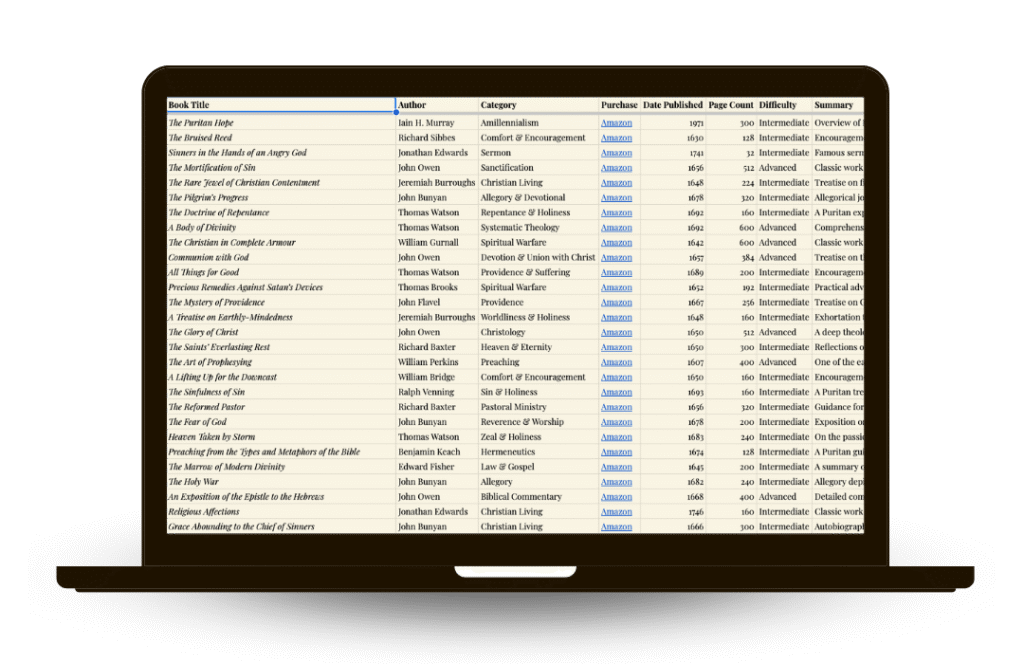
Table of Contents
- What Makes Bible Reading Different from Bible Study?
- Step 1: Be Aware of Your Own Biases
- Step 2: Choose a Faithful Translation
- Step 3: Understand Context and Literary Genre
- Step 4: Just Start with One Section a Day
- Step 5: Use Reading Aids as You Need
- Step 6: Take Notes as You Read
- Step 7: Summarize and Apply in Your Own Words
- Building the Habit
What Makes Bible Reading Different from Bible Study?
Before we get into the steps, let’s distinguish reading from in-depth study.
The point of reading is to get the big picture of the passage, chapter, or book. You want to understand what this section of Scripture is about. Little details might still pop out as you read, but that’s not the primary goal.
In-depth study is where you dig into Greek word meanings, examine commentaries, and analyze specific verses. That’s crucial work—but it’s different from reading.
You can also study theology in general, as well as the Bible.
This guide focuses on big-picture Bible reading. Think of it as getting the lay of the land before you start examining individual trees.
Step 1: Be Aware of Your Own Biases
Yes, everyone has biases when they come to the Bible.
But the question isn’t whether you have biases—it’s whether your biases are good or bad. Some biases lead you to misinterpret Scripture and down dangerous paths. Other biases (scriptural, Holy Spirit ones) are actually essential.
Proverbs 18:2 says, “A fool takes no pleasure in understanding, but only in expressing his opinion.”
We don’t want to bring our own opinions to the Bible (that’s called eisegesis). We want to practice exegesis—understanding what the original author intended, with God as the ultimate author through the Holy Spirit.
Overcoming Bad Biases
First, you need to be a Christian. The only way to properly interpret Scripture is with the Holy Spirit. If you’re not a Christian, you need to repent and believe in Jesus Christ. That’s the foundational step.
Critical scholars who aren’t Christians might identify things about the Bible, but they’ll never understand the truth contained within.
Second, adopt the analogy of faith (analogia fidei). The best bias for reading the Bible is the Bible itself. Let Scripture interpret Scripture. If a passage is unclear, let clearer passages explain it. Come with a robust, holistic picture of what the Bible actually says.
This is crucial for resisting cultural Christian influences that may not be truly scriptural.
For example, I grew up thinking the pre-tribulation rapture was obviously Biblical. After reading Scripture in context, I no longer believe it’s Scriptural. Your mileage may vary—but the point is to let Scripture, not just experience and background, shape your beliefs.
Learn from History
The conservative, historic evangelical reading of Scripture balances historical validity with scriptural faithfulness.
We need to understand how other Christians who had the Holy Spirit have interpreted the Bible throughout history. This doesn’t make any one person’s interpretation infallible. But if faithful Christians over centuries and millennia have read the Bible a certain way, we need to take that into account.
Coming to the Bible with a “clean slate” isn’t possible—and it’s not better. Ignoring history will likely lead you down dangerous paths.
Pray before and after reading Scripture. Even a quick prayer matters: “God, please reveal what this means to me today.”
I also highly recommend reading historic Protestant creeds and confessions like:
- The Westminster Standards
- The Three Forms of Unity
- The Second London Baptist Confession
- The Savoy Declaration
- The 39 Articles of Religion
These are safeguards for interpreting Scripture correctly.
Step 2: Choose a Faithful Translation
Once you’ve acknowledged your biases and committed to a scriptural framework, you need a faithful translation.
Accuracy is the most important factor. We’re looking at the Bible with a high view of its importance and authority.
But what does “accuracy” mean? It’s about being faithful to both the original Hebrew and Greek words AND the original meaning of the verse or passage.
Sometimes literal translations aren’t the most accurate for capturing meaning. But generally, I find literal translations more accurate than less literal ones.

The Best Translations
Proverbs 12:22 says, “Lying lips are an abomination to the Lord, but those who act faithfully are his delight.” Translators who accurately translate the Bible are doing the Lord’s work.
Here are the translations I recommend:
Top Picks:
- ESV (English Standard Version) – My current go-to. It’s “essentially literal”—very readable modern English while staying accurate to the original Greek and Hebrew
- NKJV (New King James Version) – Slightly less readable but more historic. I’m preferring this more these days and might fully switch soon
For Study:
- NASB (New American Standard Bible) – Very literal but can be wooden
- LSB (Legacy Standard Bible) – More flowing than NASB, recently released as a modern version
Middle Ground:
- CSB (Christian Standard Bible) – If you want something closer to NIV style, this is a good compromise
Translations to Avoid
Avoid the NIV, especially the 2011 edition. Yes, I know it’s one of the most popular, but I stand firm on this.
The NIV uses a dynamic (thought-for-thought) translation philosophy, which creates a fine line between capturing the original passage and inserting the translator’s opinions.
To make it worse, the 2011 NIV deliberately mistranslates gendered language to make it more “accessible”—which undermines accuracy.
If the NIV is all you have (the 1984 is better), you’ll still get the gist of most passages. But try to upgrade to an ESV or similar translation as soon as you can.
Avoid all paraphrase translations like The Message and The Passion Translation.
These are not faithful translations and often add the interpreters meaning into the text.
What about the King James?
The King James Version is fine.
There’s something beautiful about its poetic language and historic place in the church. And it’s still a literal translation. But for some, the language barrier will be tough.
So if you’re a KJV person, go for it.
Step 3: Understand Context and Literary Genre
Once you’ve chosen a book to read (let’s say Exodus), you need to understand its context and literary genre.
You cannot read Isaiah the same way you read Matthew. If you approach every Bible book identically, you’ll get things wrong.
I once listened to the whole Bible as an audiobook in a year (not recommended, by the way). I didn’t have the wisdom to distinguish literary genres—especially in audio format. I ended up really confused about law-themed books like Deuteronomy. I didn’t understand how Old Testament laws just get thrown out in the New Testament.
Main Biblical Genres
Not all books fit neatly into one category. Some (like Daniel or Revelation) mix multiple genres. But here are the main types you’ll encounter:
- Historical Narrative – Most of Genesis, 1 and 2 Kings
- Law – Second half of Exodus through Deuteronomy, where God’s law is proclaimed
- Poetry – Song of Solomon
- Wisdom – Proverbs, Ecclesiastes (these aren’t promises—they’re general principles for living)
- Prophetic/Prophecy – Isaiah, Jeremiah, Ezekiel (deliberately non-literal, using symbolic language)
- Gospels – Matthew, Mark, Luke, John (proclaiming Jesus’s life in narrative form)
- Epistles – 1 and 2 Corinthians, Ephesians, Galatians, etc. (letters written from one person/church to another—read them as letters with a specific sender and recipient)
- Apocalyptic – Revelation (though it’s also partly epistle)
Understanding Wisdom Literature
This is crucial: A wisdom book is not a book of promises.
Proverbs offers general wisdom—if you follow these principles, your life will generally turn out better. It’s not God saying “Every time you do this, this exact result will happen.”
You can’t read Proverbs and say, “Well, I kept my tongue controlled but bad things still happened. Why, God?” Wisdom books don’t promise that. They’re just sound principles to live by.
The Law-Gospel Distinction
Everything in Scripture generally fits into either law or gospel.
The Law condemns us and points us to the gospel, but is also the standard of God’s morality. The gospel of Jesus Christ saves us.
Not everything explicitly points to the Gospel in the passage you’re reading. Sometimes a passage showcases the law—which then points us to the Gospel.
You might feel discouraged reading Exodus, Deuteronomy, Leviticus, and Numbers because you see so much law. You think, “I can’t do all this stuff.”
That’s the point. You can’t do it. That’s why you need the Gospel.
Understanding when you’re reading Law versus Gospel is absolutely crucial for reading the Bible correctly. Everything is gospel in a sense because the law points to the gospel—but it’s not always explicitly obvious.
Step 4: Just Start with One Section a Day
Once you understand your biases, have a good translation, and know the context of your book—just start.
Begin with one section a day. Most Bibles have little headers that aren’t in the original languages (like “Israel Increases Greatly in Egypt” or “The Birth of Moses” in Exodus). Start with one of those sections daily.
This might not be a full chapter, though sometimes it will be. Don’t worry about that—just focus on one section.
Where to Start
Not sure which book to read first? I always recommend starting with the Gospel of John (the fourth book of the New Testament).
Gospels are engaging to read. They’re narrative-like but also clearly Gospel-focused (not law-heavy, which can confuse beginners, although Jesus does mention the Law very often).

Building the Habit
Here’s how to scale up:
- Week 1: One section a day (might be slow, but that’s fine)
- Week 2: One chapter a day
- Week 3: Two chapters a day
- Ongoing: Work up to about five chapters per sitting
I recommend maxing out at five chapters in one sitting. This balances retention with immersion in the book. After five chapters, most people start forgetting things.
The Puritans would read five chapters three times a day (morning, noon, and night)—15 chapters total. If you want to do more, try multiple sittings rather than one marathon session.
The daily habit is crucial.
I recently did this with Exodus—five chapters a day. I learned so much about God’s dealings with the Israelites. Even though I’d read Exodus before, I picked up little details and understood context better. Like how the Ten Commandments were written in the book of the covenant before being written on stone tablets—something I’d previously glossed over.
My next book is 1 Corinthians. I’ll use the same approach.
Step 5: Use Reading Aids as You Need
You shouldn’t read the Bible completely on your own, hoping things will work out.
Yes, you have the Spirit. But the Spirit has also given you aids to interpret and read the Bible correctly.
Your Pastor
If you’re not in a faithful Bible-believing church, get into one as soon as possible. Find a historic Protestant church where your pastor preaches the Bible faithfully.
Your pastor is the number one authority God has put in your life to help explain Scripture. That’s why he preaches on Sunday.
We don’t approach our pastors enough when reading Scripture. Don’t isolate yourself—discuss what you’re reading with your pastor. He will help you tremendously.
Study Bibles
I’m particular about this: I use a non-study Bible when doing my reading. But I’ll consult my study Bible when there’s one specific thing I didn’t understand.
Having study notes constantly visible might distract you from getting the general flow of Scripture. Save your study Bible primarily for study purposes.
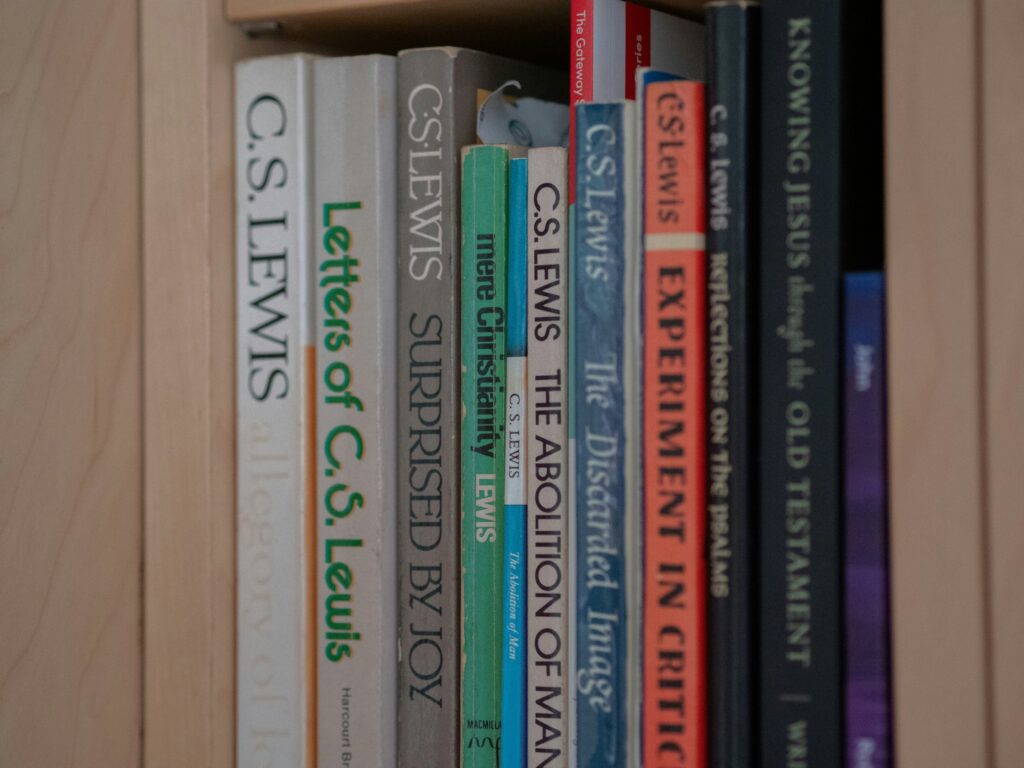
When you need one, I recommend:
Commentaries and Books
Again, I don’t typically have these open while just reading. But I might go back to them for deeper study on passages I’ve read.
If you want highly recommended, well-curated commentaries and Christian books, grab my free reading list (link in description).
All your reading aids must:
- Take all of Scripture into account
- Have a high view of Scripture as God’s word
- Be rooted in historic doctrine of the universal church
- Come from trusted sources and modern scholars who meet the above criteria
Judge all reading aids by one question: How accurate and faithful are they to Scripture?
Don’t neglect these aids thinking your interpretation is “purer” without them. That’s not biblical thinking.
Recommended: 15 Types of Books Christians Should Read
Step 6: Take Notes as You Read
When reading (not studying), I take fewer notes. Sometimes I don’t take any. But if something stands out, I always note it.
The Highlighting Debate
I’m usually not a fan of highlighting and underlining while reading the Bible. I know this sounds controversial to some of you who do this regularly.
(That being said, I have been experimenting with it more lately in my new Bible).
The point of reading is getting the big picture context. Highlighting and underlining in the moment can actually detract from that. It focuses your attention on individual parts rather than the whole flow.
This is different from how I treat other books. When I read the Bible, I want to absorb it directly without emphasizing one part over another.
Highlighting and underlining are fine for study—just not for big-picture reading.
Taking Notes After Reading
What I do instead: Take notes after the fact.
I might write a couple of sentences summarizing what I’ve read. Or I’ll verbally summarize it to a friend or my wife. The point is verbal or physical notes as part of your reading session—not days later when you’ve forgotten things.
Do your note-taking at the end of your reading session. This helps you retain what you’ve just read.
Try to summarize the passage from a big-picture view. You’re not analyzing individual Greek word meanings. You’re capturing the overall narrative and meaning.
Note: this is different to how I approach non-Bible theology books. With those, I take notes as I go.
Step 7: Summarize and Apply in Your Own Words
This ties into Step 6 but goes deeper.
The point of reading a passage is understanding what God is actually doing in redemptive history.
When I read Exodus, I can explain:
- God chose the Israelites and brought them out of slavery
- He hardened Pharaoh’s heart to show His sovereignty
- He distinguished clearly between Egyptians and Israelites
- He established them as a people, though they took a long time reaching the promised land
- The Ten Commandments were given on Sinai, first written in the Book of the Covenant before stone tablets
I can explain these things because I’ve read the entire narrative of that section and processed it.
Living It Out
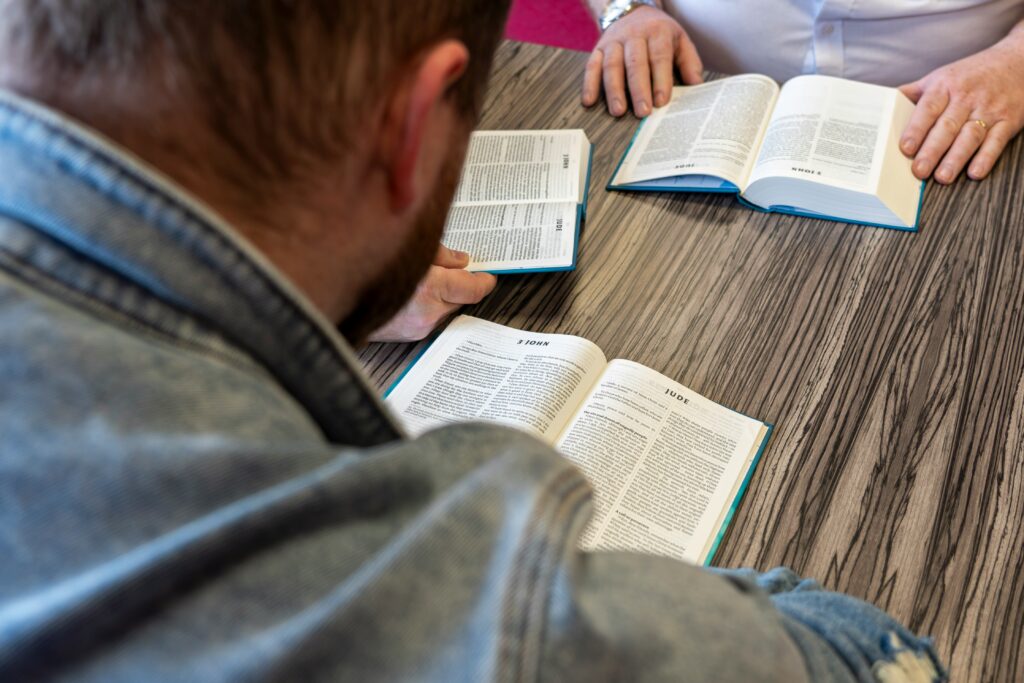
I talk with my wife about what I’ve read. I ask her questions about her Bible reading. We have shared time and individual private time.
This creates accountability so you can live out what you’re learning.
Not every part of the Bible has a direct application. I don’t read Exodus and think I need to climb a mountain and ask God for the law.
But I do understand: God’s law is important. He cares deeply about it. The majestic, powerful way He delivered the Ten Commandments shows the righteousness standard I’m called to live by—not to earn salvation, but out of joy because I’m a believer.
Summarize, apply, and live out what you’ve read. That’s the essence of proper Bible reading.
Building the Habit
These seven steps will transform how you read God’s word:
- Be aware of your own biases – Embrace scriptural biases, pray for the Spirit’s guidance
- Choose a faithful translation – Pick a literal, accurate translation like ESV or NKJV
- Understand context and genre – Know what type of literature you’re reading
- Start with one section a day – Build the habit gradually
- Use reading aids – Leverage your pastor, study Bibles, and commentaries
- Take notes – Summarize after reading, not during
- Summarize and apply – Understand God’s redemptive work and live accordingly
Reading the Bible is difficult in our modern world with constant distractions. Work, family, notifications—it’s sometimes so hard just to pick up Scripture and spend a few minutes with it.
But this is how we hear from God. This is how we grow in godliness. This is how we come to know our Creator and Savior more deeply.
The habit is challenging but simple. Start with one section today. Build from there. Let the Spirit guide you as you read God’s word the way historic Christians have for centuries.
Your Bible reading journey starts now. May God bless it richly.
Want help building better Bible reading habits? Join Homegrown Theologian. You’ll get step-by-step guidance on removing distractions, finding the best reading times, and increasing your daily intake of Scripture and theology.
