


Reading is a fundamentally Christian activity.
But you don’t want to read just like any pagan out there. We need a theology of reading that is historical and Biblical.
So here are the seven reformed reader pillars that will help you read with understanding, grow in godliness, and honor God through your reading.
Let’s dive into each of these below.
Table of Contents
- Pillar 1: Read Scripturally
- Pillar 2: Read Systematically
- Pillar 3: Read Widely
- Pillar 4: Read Deeply
- Pillar 5: Read Regularly
- Pillar 6: Read Wisely
- Pillar 7: Read Joyfully
- The 7 Pillars Summarized + Recommended Books
Pillar 1: Read Scripturally
As reformed Christians, we’re sola scriptura—by Scripture alone. So what the Bible says about reading is number one.
But where in Scripture do we arrive at that conclusion?
The Bible Is a Book
This matters. The Bible isn’t a movie, TikTok, or podcast.
It’s written words on a page.
The medium is spiritual, not arbitrary. There’s something sacred about books because it’s God’s chosen medium to communicate His word.
Need more convincing? The Bible was written over millennia across many cultures: antediluvian, Israelite, Greco-Roman etc.
This shows us that reading and writing isn’t for just one period in history. It’s for all ages.
What Scripture Says About Reading
2 Timothy 3:16-17 – “All Scripture is breathed out by God and profitable for teaching, for reproof, for correction, and for training in righteousness, that the man of God may be complete, equipped for every good work.”
The written word is breathed out by God. It has His presence on it. If we want to learn how to read like a Reformed Christian, this is the central truth to remember.
2 Timothy 4:13 – “When you come, bring the cloak that I left with Carpus at Troas, also the books, and above all the parchments.”
Paul specifically requests books AND parchment to write new works. Reading and writing new books matter.
Acts 17:28 – Paul quotes non-inspired poets: “For in him we live and move and have our being.”
Things in general revelation can align with God’s truth. Books from outside the Bible can become part of the Bible through quotation.
1 Thessalonians 5:21 – “But test everything. Hold fast what is good.”
We test ideas, philosophies, the words of men. There are things outside Scripture that line up and affirm Scripture.
This verse points directly to sola scriptura—we can only hold fast what is good by knowing what is good through God’s word.
Ecclesiastes 12:12 – “Of making many books there is no end, and much study is a weariness of the flesh.”
Notice the words “many” and “much.” Solomon warns against excess, not against reading itself. Because he says don’t overdo it, there’s an implicit assumption that you should be doing it.
In short – Scripture assumes reading is normal and noble. But how do we practically live that out?
Pillar 2: Read Systematically
You need a plan. You need to be deliberate about what you’re reading.
Read things that make sense for where you’re at in your life and where God is speaking to you.
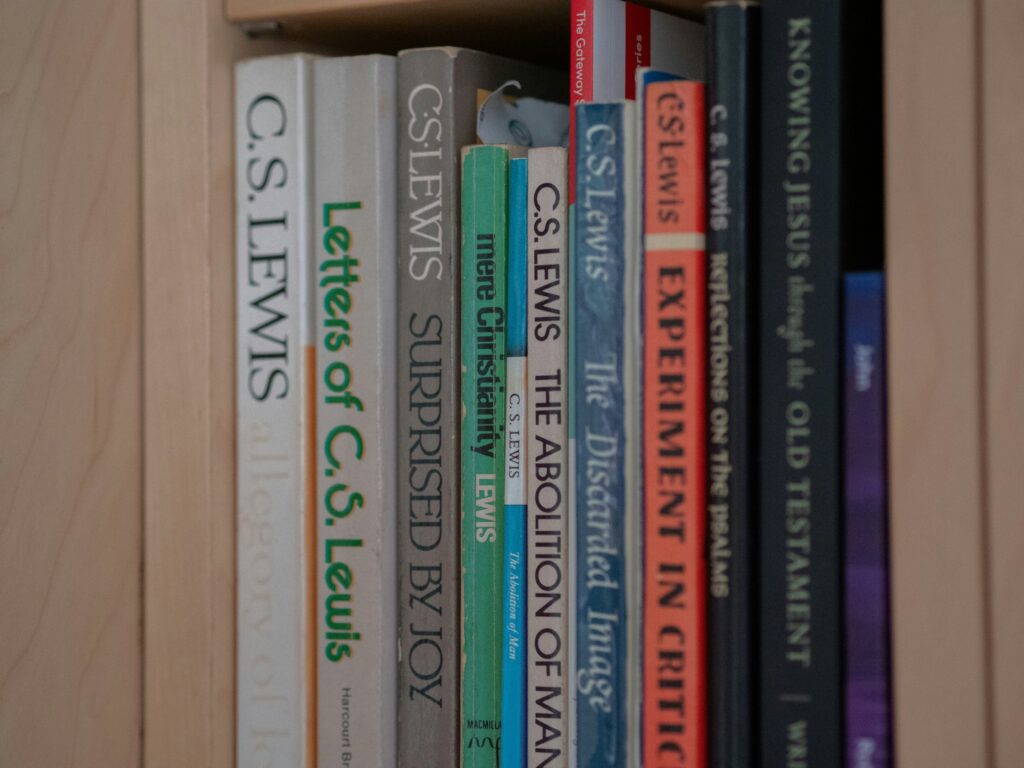
The Three-Month Plan
I always have a rough idea of what I’m reading for the next three months (or 12-weeks, if you prefer).
I own those books so I can move on to the next one. This gets me excited about what’s next.
But it’s also a living, breathing thing—I’m not locked in and can change the plan at any moment.
Planning three months just works. Anything longer gets difficult. Anything shorter doesn’t give enough vision.
But I also use two lists:
Two Lists
List 1: Want to Read – Books you plan on reading someday but don’t know when. Update it regularly. Prune books that no longer serve you. This could contain years worth of reading.
List 2: Next Three Months – Your immediate 3-month reading plan. The top book is what you’re reading now.
Read what makes sense at this point in your life. Whether it’s eschatology, the doctrines of grace, or Christian classics like C.S. Lewis or A.W. Tozer.
Pillar 3: Read Widely
Think of your reading like a T-shape. The Bible is the pin in the middle that holds everything together.

1. The Bible (The Center)
Read the Bible regularly: family worship, Sunday worship, Bible studies throughout the week.
This underpins every other bit of reading you do, and it gives you the ability to test everything.
2. Theology and Christian Books (50-80% of Your Reading)
You’re free in Christ to read anything. But reading theology grounds you strongly.
It helps you encounter alternative worldviews and understand the word through gifted theologians across history, especially since the Reformation.
3. Everything Else (The Width)
Read the Western canon, fiction, non-fiction, philosophy, productivity, parenting books, economics, psychology, computer programming. Anything is permissible.
Each of you will focus differently based on your life. For example, I read parenting books because I have two young kids. And I read business books because I run a business.
Pillar 4: Read Deeply
Reading deeply is more important than reading widely. I’d rather you start deeply than widely.

Here’s what I mean.
Prioritize Old Books
C.S. Lewis recommends reading an old book every second or third book.
Charles Spurgeon says, “Visit many good books but live in the Bible.”
Don’t just read the latest theology book. Read books from the early 1900s, Reformation-era books, the Puritans, the church fathers, medieval theologians like Aquinas.
There’s richness in old books, and they often point back to Scripture.
If the old English is a struggle, there are modern translations. But eventually read them in the original language. You’ll begin understand depth we’ve lost in English.
Books That Challenge You
Choose books that grow and challenge you.
And while nothing challenges you like Scripture… it’s okay to read other challenging books too.
But if I could choose: read five books that make a difference in your life versus 50 books you forget about.
We’re going for understanding, then wisdom. Not just head knowledge.
Pillar 5: Read Regularly
You need a regular rhythm of reading in your life. For both the Bible and other books.

Start Where You’re At
Are you a brand new reader? Start with 5 minutes a day. Something small. Grow it over time.
More experienced but not consistent? Start with something on the lower end, like 10-15 minutes.
One of the worst things people do: they think they need to read tons straight away. It’s like doing crazy workouts from day one at the gym.
You won’t last. It’s unwise. It’s not being honest with where you are.
The cure is humility. You need to be able to say: “I want to get to that point. I wish I was there. But I’m going to start simple and grow it over time.”
One day you’ll be able to read whole books in a couple days. But set a time, set a place, set a length or page count, and go from there.
The next pillar encapsulates exactly what it means to learn how to read like a Reformed Christian. Particularly the “Reformed” part.
Pillar 6: Read Wisely
Read with understanding. But also translate that understanding into wisdom that changes the way you live as a Christian.
Four Keys to Wise Reading
1. Read Slowly
There’s such a thing as reading so fast that you retain nothing.
It’s like running over hot coals. Run fast, your feet don’t get hot. Step slowly, every step burns.
Avoid this – slow down 25%-50% and you’ll retain most of what you read.
We want the burning of books into our minds. So read at a pace where things go in properly.
And then reread bits you didn’t understand – better to do that then to miss crucial insights.
2. Highlight Strategically
Some people highlight every second sentence. But if you highlight everything, you’re highlighting nothing.
Instead, I highlight 10 to 15 times in a 300-page book. Some books more, some books less.
Only highlight when something has to be highlighted. When it changes how you think about something. Put a little line in the corner of the page so you can find it later.
3. Summarize in Your Own Words
Take all the bulk of information and distill it into essential parts.
Read a book, then distill it into a few sentences when summarizing a chapter or the whole book.
Writing a few notes gets the key ideas through your brain.
4. Teach Others
Explain what you’ve learned in verbal conversation. This forces you to really know the material (as you’ll learn pretty quickly).
Why does this work? Because when you summarize and teach, you see practical implications more clearly. Dots connect, lines get drawn, any you systematize information into an easy-to-understand format.
But you may ask – “why can’t I just regurgitate what the book says?”
Sometimes things have clear practical implications. But sometimes it’s understanding God better, which then changes many little things in your life.
For example: understanding Calvinism doesn’t change one specific, practical thing, but at the same time it changes everything.
Your reverence towards God, frequency of prayers, freedom from anxiety because He’s sovereign over everything including your salvation.
But something like generous giving to the local church? That’s a clear, practical implication.
This is what teaching others forces you to learn.
And then don’t forget this last one.
Pillar 7: Read Joyfully
You need to read with other like-minded Reformed Christians.

This is why I started Homegrown Theologian.
We read in community, stay accountable, teach each other what we’re learning, see overlaps between books.
And we also help Christians build good reading habits based on these 7 pillars we’ve covered.
The 7 Pillars Summarized + Recommended Books
These pillars capture what it means to learn how to read like a Reformed Christian.
Reading isn’t just a hobby. It’s a spiritual discipline. A means of grace – especially when reading God’s word. A way to know God better, understand His word more deeply, and grow in wisdom and godliness.
Don’t read like the world reads. Read as one who is in Christ, for the glory of God.
On that note, I’d like to leave you with some books to read that will help you on your journey:
- How To Read a Book by Andrew David Naselli (a great introduction)
- How To Read a Book by Mortimer Adler (goes a bit deeper and written not just for Christians)
- Lit!: A Christian Guide to Reading Books by Tony Reinke (helpful for balancing Scripture and theology)
