

Most Bible study tips are the same.
Read a passage. Look at the cross references. Check the study notes. Pray. Repeat.
And that’s not bad advice. But if you’ve been doing it for years, you know it can start to feel mechanical. You want to go deeper, but you’re not sure how.
Today I want to share 9 Bible study techniques that are a little underrated, a little unconventional, and genuinely enriching when you actually try them.
From weird cross-referencing methods to a Bible memorisation strategy most Christians have completely abandoned – let’s get into it.
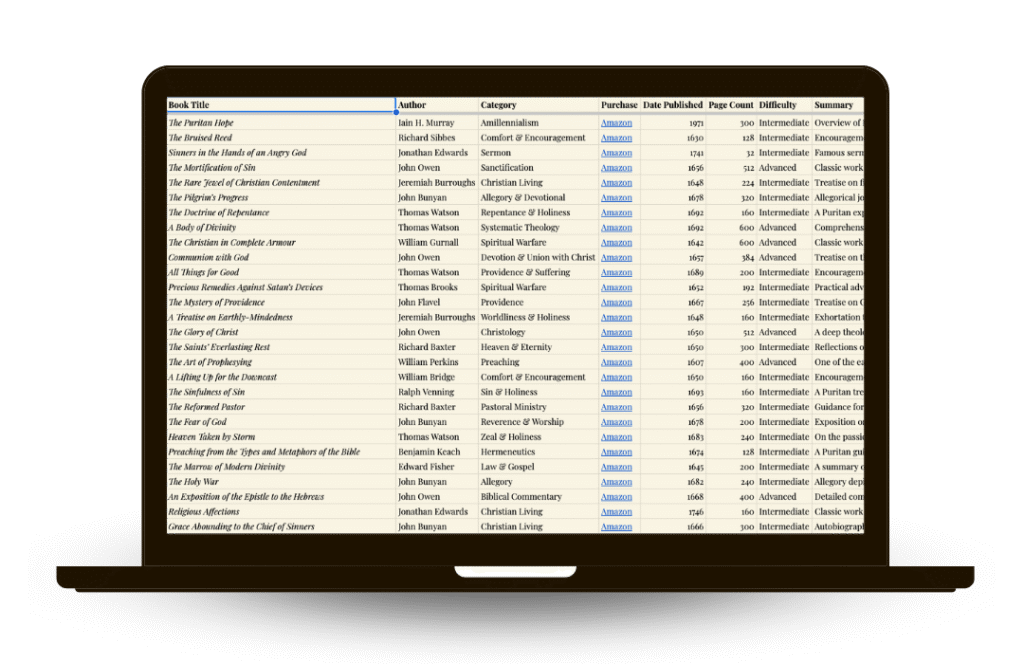
Table of Contents
- #1: Search for the Most Commonly Used Greek/Hebrew Words in a Bible Book
- #2: Read the Whole Book Three Times Before Studying Any Passage
- #3: Choose Your Next Bible Book Based on Cross-Reference Frequency
- #4: Write Out Passages by Hand to Internalise Them
- #5: Use Old Commentaries, Extensively
- 6. Read Theological Works Side by Side With the Bible Book You’re Studying
- #7: Watch a Full Sermon Series on the Book You’re Studying
- #8: Use a Bible Memorisation App
- #9: Use AI to Build a Topical Study Guide
- Final Word
#1: Search for the Most Commonly Used Greek/Hebrew Words in a Bible Book
This is a tip I’ve only started using recently – and it’s immediately changed how I approach a new book of the Bible.
Here’s the idea: before you dive into studying a book, you search for the most frequently used keywords in that book — the nouns, verbs, and adjectives in the original Greek or Hebrew. The real content words that carry the book’s meaning (so exclude particles, pronouns or conjunctions).
Why does this help? Because a book of the Bible can seem to have a dozen competing themes until you look at the language – and suddenly it collapses into a unified picture.
Here’s the Google search template I use:
“Most frequently used key Greek/Hebrew words in the book of [X] besides particles and pronouns”
When I did this with the book of James (which my church is currently preaching through), two things jumped out immediately.
First, the Greek root for trials and temptations (which share the same root) appeared repeatedly, showing that the theme of enduring difficulty runs through the whole letter.
Second, the word teleios (perfect or complete) kept surfacing, giving me a framework for the whole book: James is calling us toward completeness in the Christian life, even though we won’t fully attain it until glory.
That single search shaped how I read every subsequent passage in the book. Try it with whatever you’re studying now.
#2: Read the Whole Book Three Times Before Studying Any Passage
Most people pick a passage and start studying immediately. This tip flips that approach entirely.
Before you do any in-depth study on a specific passage, read the entire book three times through. Three readings is the sweet spot — by the third time, the structure and flow of the book will start to feel natural. Certain passages will stick. You’ll begin to sense how the pieces fit together.
Then go back and do your in-depth study.
The payoff is significant. When you eventually dig into a specific passage, you’ll have the surrounding context already in your head. You’ll remember what came before it and what follows. You’ll be able to link themes across the book rather than reading each passage in isolation.
Take the patriarchs in Genesis as an example. If you’ve read the whole book three times, by the time you’re doing a deep study on Jacob, you already have Abraham and Isaac fresh in your mind — and you’ll naturally notice the patterns running through all three lives.
With longer books (e.g. Psalms), you can break them up into the 5 smaller internal books (Book I to V).
That’s the kind of biblical thinking that comes from context, not just from close reading of individual verses.
Recommended: How to Read the Bible Properly: 7 Steps Christians Often Miss
#3: Choose Your Next Bible Book Based on Cross-Reference Frequency
Most people choose their next book of the Bible on-the-fly, or based on whatever a reading plan tells them. Those are both fine, but this technique is more intentional and more rewarding.
The idea is simple: as you’re reading your current book, pay attention to which other books of the Bible are most frequently cross-referenced. Whatever keeps coming up is probably worth reading next.
To do this properly you’ll need a good study Bible — the ESV Study Bible or NKJV Study Bible both work well — or software like Logos. You can also use Google if needed.
There are three types of cross-references you’ll encounter:
- Fulfilment references — an Old Testament prophecy pointing forward to a New Testament event, or vice versa.
- Parallel accounts — similar events or teachings appearing in different books.
- Adjacent themes — passages in different books that address the same theological idea.
For example, I was reading Romans 5:18 and came across the phrase “all men” with a cross-reference to John 12:32, where Jesus says he will draw “all people” to himself. That connection caught my attention.
And when I noticed how frequently John kept appearing in Romans’ cross-references, it became obvious: reading the Gospel of John after Romans would deepen my understanding of both.
The same logic applies elsewhere. If you’re reading Hebrews and keep seeing references to Leviticus and the Pentateuch — go and read Leviticus next. Let the Bible tell you where to go.
#4: Write Out Passages by Hand to Internalise Them
I started doing this as part of sermon preparation. But I’d recommend it to every Christian, not just those who preach.
Writing out Scripture by hand, with pen and paper, internalises it in a way that nothing else quite replicates. Typing doesn’t produce the same effect. I’ve tried it. The slow, deliberate act of writing forces your mind to engage with every word in a way that reading passively simply doesn’t.

A few practical tips:
- Include the verse numbers as you write. This helps you memorise the structure of the passage and see where the flow pauses and shifts.
- Leave one line per verse so it’s easy to follow. Start the next verse on a new line.
- And if you want to take it further, write out the passage multiple times — each repetition deepens the internalisation further.
You don’t need neat handwriting. Mine has been described as chicken scratch since grade 1 in school. It doesn’t matter.
This technique works especially well in combination with tip #8 below — so keep reading.
#5: Use Old Commentaries, Extensively
Not just occasionally. Extensively. Sometimes to the near-exclusion of modern ones.
Modern commentaries are excellent for technical detail — manuscript evidence, historical background, the breadth of contemporary scholarship. Others are great for modern application in the 21st century. I’m not dismissing them.
But for devotional richness and doctrinal depth woven together, the old Reformed commentators are in a class of their own. The Puritans and Reformers didn’t treat theology and warmth as separate things. They’re inseparable in the best old commentaries — and that integration is exactly what Bible study needs.
My go-to old commentaries:
- Matthew Henry’s Complete Commentary — readable, devotionally rich, and thoroughly Calvinist. Make sure you use the original, unedited version. The edited versions strip out significant portions of his doctrine, which defeats the purpose.
- John Calvin’s Commentaries — outstanding. Hard to get in a full print set, but freely available online and on Kindle.
- John Gill — slightly later than Calvin, very readable, often helpfully succinct.
- Charles Spurgeon — not a complete commentary set, but his sermon notes and illustrations on specific passages are worth tracking down when you can find them.
These are writers rooted in the Protestant Reformation, with a high view of Scripture and a theological framework you can trust. Their devotional depth will challenge and nourish you in ways that even the best modern commentary often won’t.
Recommended: How to Build a Theological Library (7 Steps from Scratch)
6. Read Theological Works Side by Side With the Bible Book You’re Studying
Most people read the Bible and occasionally pick up a devotional or study guide on the side. This tip takes that instinct further — and makes it more systematic.
The idea is to match a theological book thematically to the Bible book you’re currently studying, and read both together.

A few examples of how this works in practice:
Reading Genesis? Pick up a book on covenant theology or creational theology and read it alongside. Reading Romans? Pair it with a book on the order of salvation or on election and predestination. Reading Revelation? Read an eschatology book simultaneously. Reading the Gospels? Paul Washer’s The Gospel of Jesus Christ pulls out the key gospel message from the gospel accounts and organises it systematically — a natural companion.
The reason this works so well is that it connects the specific biblical text to the broader theological doctrine it’s teaching. You’re not just reading about a doctrine — you’re seeing it in its canonical context, in the very passages where it’s being revealed. The systematic and the biblical illuminate each other.
My Ultimate Reformed Book List is the best place to find theologically sound books matched to specific topics — over 400 titles, all categorised and curated. Access it below.
Recommended: 15 Types of Books Every Christian Should Read
#7: Watch a Full Sermon Series on the Book You’re Studying
You’ve probably heard the advice to watch a sermon on the passage you’re studying. This is the same idea — taken further.
Watch a full sermon series on the entire book, not just a single sermon on a single passage.
Following a preacher through an entire book gives you something a one-off sermon can’t: you see how they handle the flow, the transitions, the themes that build across chapters, the doctrines that emerge progressively. It’s a completely different level of insight.
The YouTube search template I use:
“[Book of the Bible] sermon series [optional: preacher or church name]”
For example: “Book of John sermon series John MacArthur.”
Once you’re on YouTube, switch to the Playlist tab in the search results. This will surface organised playlists of full sermon series — sometimes 50, 100, even 200 sermons on a single book. Work through them alongside your reading and study.
A few things to keep in mind: prioritise whatever your own church is preaching through — the ordinary means of grace come first. And it’s worth cross-referencing more than one preacher for theological breadth and to check for soundness. But when you find a good series from a trusted preacher, following it in full is one of the most enriching things you can add to your Bible study routine.
#8: Use a Bible Memorisation App
Bible memorisation is a lost art in the 21st century.
For much of church history, memorising Scripture wasn’t a spiritual extra — it was a necessity. Many Christians had no personal copy of the Bible for centuries. Memorisation was their access to the word.
We have no such excuse today. And yet the abundance of Bible access has, ironically, made us less likely to hide the word in our hearts.
I’m not talking about Sunday school memory verses here. I’m talking about whole books. Jude. Ephesians (what I’m currently working through). James. Full, complete books of the Bible committed to memory.
I know that sounds daunting. An app makes it manageable.

The one I use is Bible Memory (biblememory.com). It’s not perfect — there are features I wish it had — but it’s the best option I’ve found. Here’s why it works:
It sends daily reminders so memorisation stays consistent. It uses spaced repetition, reviewing verses less frequently as you improve. It groups passages by book, chapter, or custom theme.
And it uses a three-step process that I’ve found genuinely effective: first you type the initial letter of each word, then you recall every second word, then you write it out completely from memory.
My personal approach: repeat step one five to ten times, step two two to three times, then do step three as often as the app prompts me.
Another option worth knowing about is learnscripture.net — a web-based tool with a slightly better memorisation structure (more steps to make it smoother), though the interface is dated and the translation selection is limited.
Used in conjunction with tip four (writing passages by hand), Bible memorisation becomes significantly more effective. The two techniques reinforce each other.
#9: Use AI to Build a Topical Study Guide
Sometimes you want to study the Bible on a specific topic — a doctrine you’re wrestling with, a question you can’t resolve, two doctrines you’re trying to reconcile. The challenge is knowing where in Scripture to start.
AI can help with this — carefully used.
The prompt I use:
“Which books of the Bible should I study in whole or in part to understand [X doctrine]?”
When I typed in sin, the response pointed me to Genesis, Romans, several Psalms, and other key passages — a genuinely useful starting map for that topic.
If you’re unsure whether the AI’s suggestions are theologically sound, add this to your prompt:
“Please approach my query from a historic Reformed perspective.”
This steers the response toward more biblically grounded, confessionally sound suggestions and away from theologically liberal or shallow interpretations.
A few important caveats: always verify AI suggestions against the Bible itself. Don’t take any recommendation at face value. AI is a useful tool for suggestions and starting points — not a theological authority. Treat it like a search engine with better sentence structure, not like a commentator you trust.
But for mapping out a topical study plan, it’s one of the most underused tools available to the serious Bible student today.
Recommended: How To Study Theology (Without Seminary): The 5-Step Guide
Final Word
Nine techniques — most of which take nothing more than a willingness to try something a little different:
- Search for key Greek/Hebrew words to unlock a book’s central theme before you begin
- Read the whole book three times before studying any individual passage
- Choose your next book based on cross-reference frequency
- Write out passages by hand to internalise them deeply
- Use old commentaries — extensively — for devotional and doctrinal richness
- Read theological works side by side with the Bible book you’re studying
- Watch a full sermon series on the book, not just a single sermon
- Use a Bible memorisation app to hide the word in your heart
- Use AI for topical study suggestions — carefully and critically
You don’t have to implement all nine at once. Pick one, try it this week, and see what it does for your time in the word.
The goal is always the same: to know God better through His word.
Want the best theological books to read alongside your Bible study? Grab my free Ultimate Reformed Book List — over 400 curated titles across 25+ categories.
