

The Puritans are notoriously tough to read for modern Christians.
The older English, the complex theology, and the sheer depth of their works puts people off before they even begin.
But starting to read the Puritans doesn’t have to be hard. Here are five entry-level Puritan works that you can pick up, start today, and actually enjoy reading.
I recommend reading them in the order presented below. But of course, feel free to switch it up.
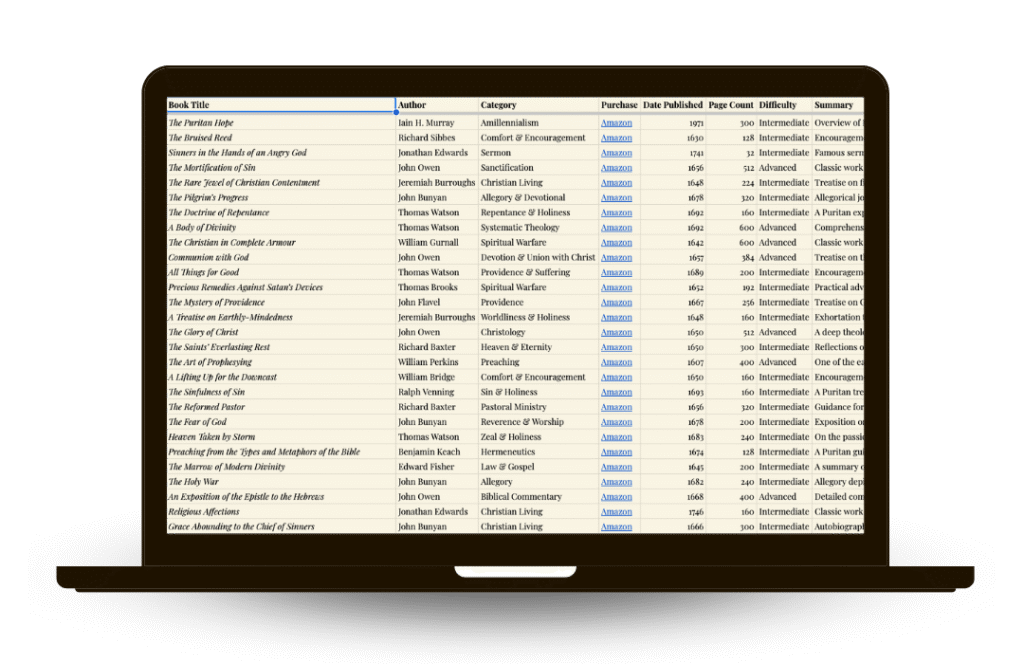
Table of Contents
Why Read the Puritans at All?
If you’ve spent any time in Reformed and Calvinist circles, you’ve heard people talk about the Puritans with hearty appreciation.
And for good reason — their depth of biblical insight, experiential theology, and pastoral wisdom is almost unmatched in church history.
The problem is that most people pick up a Puritan work, read two pages, and put it down forever.
These five books below are designed to fix that. They are the on-ramp, not the highway. Start here, wet your feet, and the deeper works will follow naturally.
Recommended: How To Study Theology (Without Seminary)
The 5 Best Entry-Level Puritan Books
#1: The Pilgrim’s Progress by John Bunyan
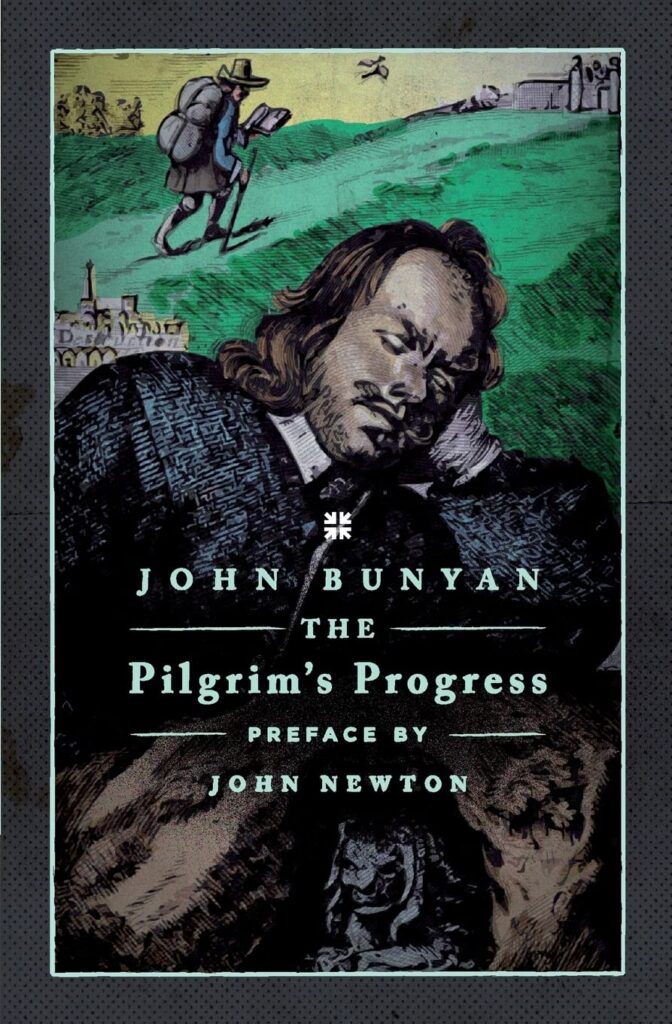
If you want to ease into the Puritans, start with the greatest Christian allegory of all time.
The Pilgrim’s Progress is the book Charles Spurgeon reportedly read over 100 times in his life. It was also the first Puritan work I personally read – and honestly, it’s what got me down the Puritan rabbit hole in the first place.
Why start here specifically?
First, it’s allegorical fiction – and fiction is easier to read than non-fiction. You’ll get into this book quickly. A story is simply a lower barrier to entry than a rich theological treatise, which is what most Puritan works are.
That said, don’t let the word “fiction” fool you. This book is deeply rich in practical, experiential theology.
Second, it paints a vivid and realistic picture of the Christian life. The main character, Christian, walks through various trials that you’ll instantly recognise.
Whether it’s friends who turn away from the faith, the temptation toward legalism and moralism, seasons of dryness and despair, or the vanities of the world choking us away from Christ — Bunyan has seen it all and written it with painful accuracy.
(Fun fact: Vanity Fair – the place in the book – is where the trashy magazine gets its name.)
Third, you will see your own trials and temptations reflected in Christian’s journey. That’s rare in any book. It’s what makes this one stick.
On editions: there are modern English versions of The Pilgrim’s Progress that lower the friction even further. I’d recommend picking one that updates the English rather than abridges or paraphrases it — you want to retain the rich flow Bunyan put into the work.
#2: The Bruised Reed by Richard Sibbes
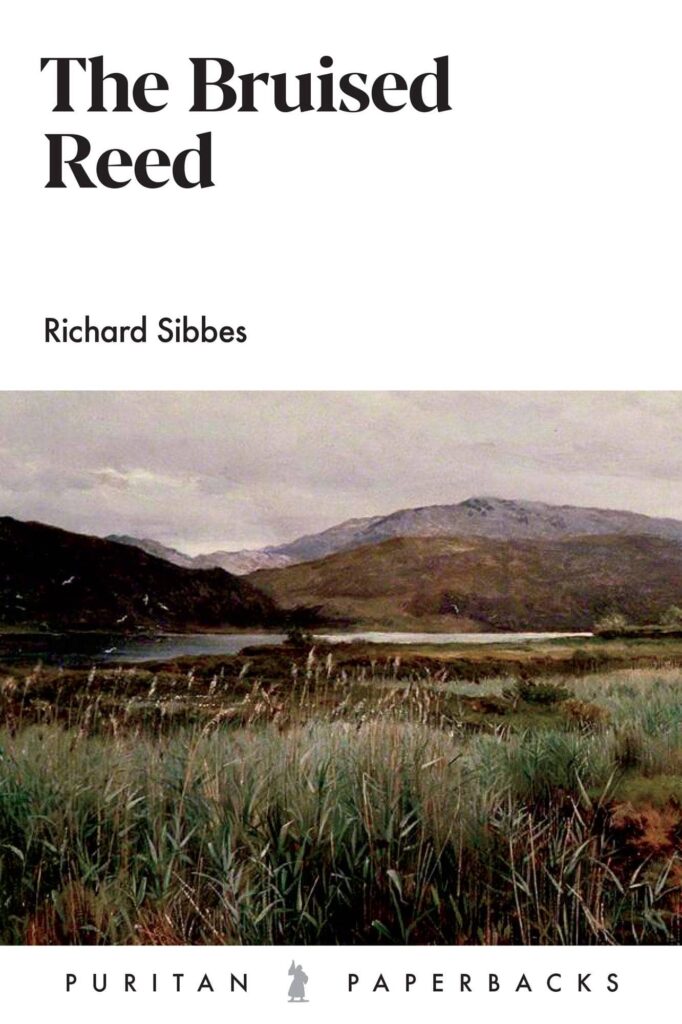
If The Pilgrim’s Progress is the fiction entry point, The Bruised Reed is your first real theological treatise – and it’s the perfect one to start with.
I read this early on in my Puritan reading journey and it is fantastic. Here are 3 reasons you should read it:
First, at around 138 pages, it has a very low barrier to entry for a theological work. You’re not committing to a 600-page systematic. You can finish this in a week or two of consistent reading.
Second, like most Puritan works, it’s an exposition of a biblical text. In this case, Isaiah 42:3 – “A bruised reed he will not break, and a smouldering wick he will not snuff out” – the same verse quoted by Christ in Matthew 12:20.
This means you’re getting the richness of both Old and New Testament woven together and applied to the Christian life. You’ll also quickly notice something characteristic of Puritan literature: it’s not just an exposition of one key text, but a constantly expanding web of Scripture, linking passage after passage to support the central claim. This may slow you down – and that’s good. Remember – meditation, not speed.
Third, Sibbes strikes a profound balance between our security in Christ and the reality of suffering in the Christian life. There is this tension throughout the book: we are in Christ, we will never be broken, the smoking flax will never be quenched — and yet the bruising is real. The seasons of weakness are real. They feel like they’ll never end.
But Sibbes shows us the purpose of that bruising. It is necessary for our growth. It is, in fact, a sign of God’s strength at work in us.
Here’s a quote that captures it well:
“After conversion, we need bruising so that reeds may know themselves to be reeds and not oaks. Even reeds need bruising by reason of the remainder of pride in our nature and to let us see that we live by mercy.”
And then this, on the comfort available to us in Christ:
“What a support to our faith is this, that God the Father, the party offended by our sins, is so well pleased with the work of redemption… seeing God’s love rests on Christ, as well pleased in him, we may gather that he is as well pleased with us if we be in Christ.”
When God looks at you, He sees Christ. That is the foundation on which Sibbes builds his entire pastoral argument — and it is glorious.
I’ve also done a full review of The Bruised Reed on this blog, so go check that out too:
#3: Precious Remedies Against Satan’s Devices by Thomas Brooks
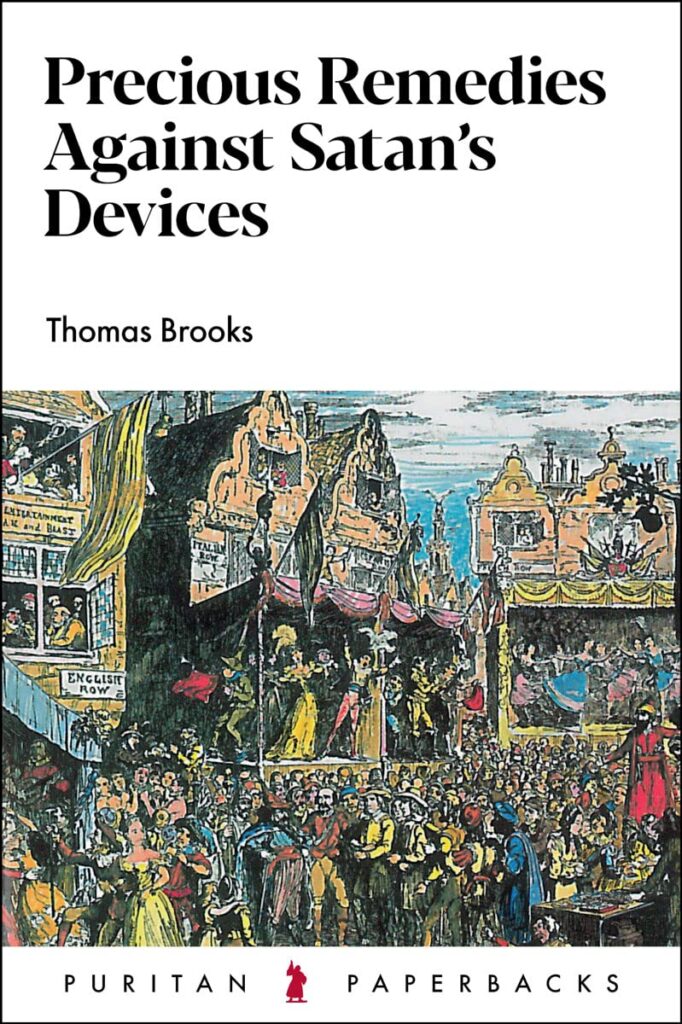
Many people skip straight to John Owen when they want to understand sin and Satan. But I actually think this book is the better place to start — and it’s one I wish I had read earlier.
First, the book is an exposition of 2 Corinthians 2:11 — “Lest Satan should take advantage of us, for we are not ignorant of his devices.”
Brooks takes that verse and builds a literal field manual for understanding how the enemy works to pull us away from God’s will.
Second, it is very neatly and clearly organized. Brooks breaks Satan’s devices into four categories:
- How Satan draws us into sin
- How he pulls us away from holy duties
- How he makes us sad and miserable in the Christian life
- How he uses different devices on different types of people
Within each category, Brooks states the device, explains it, and then provides multiple scriptural remedies — like a doctor prescribing treatment for a sick patient.
Here’s an example. There’s a subsection on “devices against the great and honourable of the earth.” Brooks identifies Satan’s first device against such people as this: working them to make self-advancement their chief business — elevating themselves, enriching themselves, securing themselves.
Then he prescribes remedies. Remedy one: self-seeking puts men on a path of multiplied sins, against God’s law, the gospel, and even the laws of nature. Remedy two: self-seeking degrades a man. Remedy three: consider the dreadful woes that Scripture pronounces on the self-seeker.
Each remedy is replete with Scripture. You could take one remedy per day, study every reference in it, and be thoroughly edified.
Third, the book is only around 250 pages. With that clear structure, you’ll make good headway quickly — and you’ll retain it.
Brooks himself opens the book with a line worth remembering: “It is not he who reads most, but he who meditates most, who will prove the choicest, wisest, sweetest Christian.”
#4: The Rare Jewel of Christian Contentment by Jeremiah Burroughs
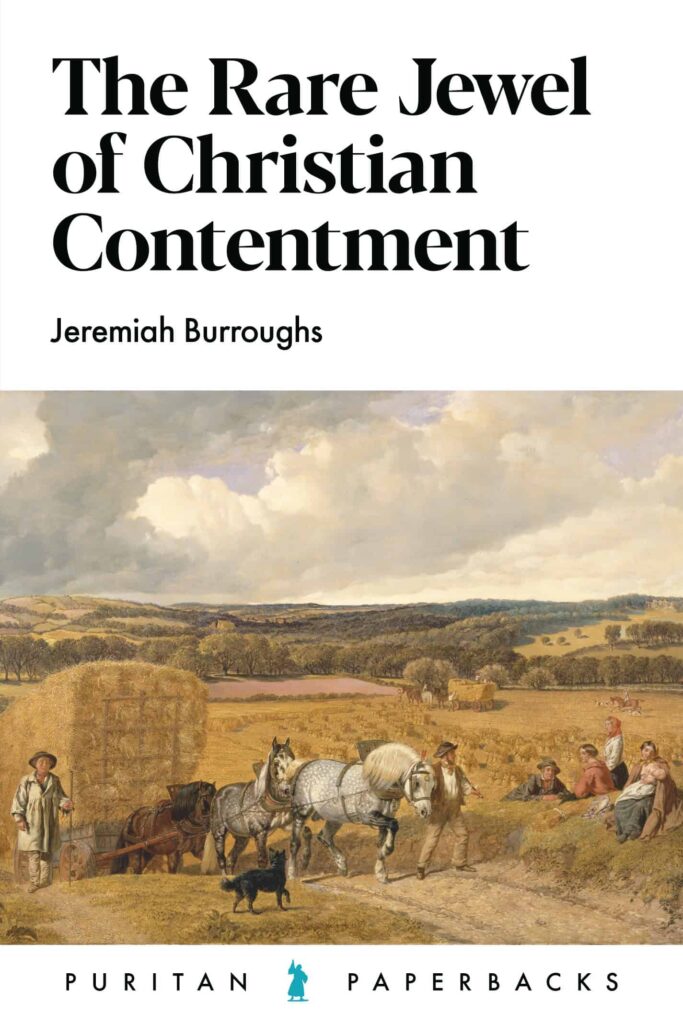
If there is a book that 21st-century Christians must read at all costs, it is this one.
We’ve been reading it for our Homegrown Theologian book club this month, and it is exactly what the modern Christian needs to hear.
First, it’s an exposition of Philippians 4:11 – “I have learned, in whatsoever state I am, therewith to be content.” Burroughs unpacks what it actually means to be content with what God has given you – not as a passive resignation, but as a learned spiritual art.
He says in the opening chapter: “Contentment in every condition is a great art, a spiritual mystery. It is to be learned and to be learned as a mystery.”
Second, the book deals extensively with the opposite of contentment: murmuring and complaining. Burroughs shows from Scripture just how serious the sin of murmuring really is. Here’s a passage that landed hard when I read it:
“Whatever we have is free of cost. What though we have not got what we would have, seeing what we have is free? If what we have were earned, then it would be something. But when we consider that it is all from God, for us to murmur at his dispensations is very evil.”
He uses the illustration of a man who stays in a friend’s home free of charge — and yet complains about the food, the servants, and the house. How much more absurd, then, that we who are in Christ would grumble at the circumstances God has placed us in.
Third, the final section of the book is intensely practical. Burroughs gives direct instruction on how to attain contentment. Some highlights:
- Consider the sea of God’s mercies. As Luther said, “The sea of God’s mercies should swallow up all our particular afflictions.” Pour a pale of water on a floor and it makes a mess — throw it in the sea and there’s no sign of it.
- Accept that the world has mixed conditions — good times and hard times both come.
- Remember that the time you have in this world is short. Don’t spend it grumbling.
- Consider those who have been in far worse situations — and that God has brought good out of difficulty in your own life too.
- Understand that God has placed boundaries on your life, and constantly pushing against them never works out.
There’s much more I could say. Just go and read it.
#5: The Mortification of Sin by John Owen
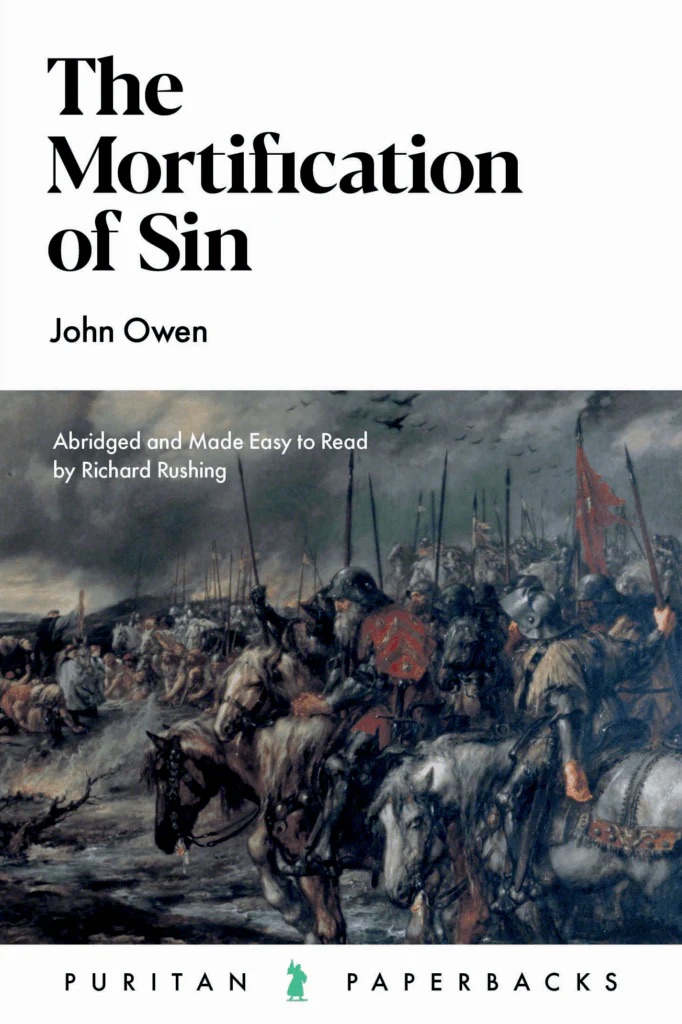
Do you think you don’t really struggle with sin? Do you think you’re a fairly good Christian?
This book will shred that notion quickly.
I want to be clear: this is not on this list because it’s easy. It isn’t. I’m including it because people need to read it as soon as possible — and because it begins to reveal the depth and beauty that Puritan literature contains at its best.
You’ll keep reading it not because it’s comfortable, but because you’ll be constantly challenged and you’ll want to know the scriptural answers to the remaining corruption you’re wrestling with.
First, Owen reminds us that we have real power, through the Spirit, to kill sin in our lives. This is something we cannot forget. Sin is defeated. We may not see the full fruit of that on day one of the Christian life — but the power is ours.
He grounds this in Romans 8:13: “For if ye live after the flesh, ye shall die: but if ye through the Spirit do mortify the deeds of the body, ye shall live.”
Mortification is not optional. It is essential to the Christian life.
Second, Owen shows us the need to kill sin not just occasionally — but daily. He says directly:
“Do you mortify? Do you make it your daily work? Be always at it whilst you live. Cease not a day from this work. Be killing sin or it will be killing you.”
You may have seen that quote before. Now you know where it comes from.
And he goes further — every sin, left alive, will grow. Every unclean thought would become adultery if it could. Every covetous desire would become oppression. Every thought of unbelief would become atheism, if it were allowed to reach its full growth.
Third, Owen confronts the self-deception of thinking that killing one sin will fix everything. We’ve all fallen into this trap. If I just stop lusting. If I just stop lying. Then everything will be okay.
Owen’s response is blunt: “Thou settest thyself against a particular sin and dost not consider that thou art nothing but sin.”
Sin grows in all areas of our lives — including places we’re not expecting. The Spirit’s work, if we trust Him, will illuminate sin not just in one area but across the whole of our lives. And that is a wonderful, sanctifying truth.
I’ve also done a full review of The Mortification of Sin as well:
A Final Word
These five books form the best possible on-ramp into Puritan literature:
- The Pilgrim’s Progress – Bunyan (allegorical fiction, start here)
- The Bruised Reed – Sibbes (your first theological treatise)
- Precious Remedies Against Satan’s Devices – Brooks (a field manual for the Christian life)
- The Rare Jewel of Christian Contentment – Burroughs (essential for the modern Christian)
- The Mortification of Sin – Owen (challenging, but non-negotiable)
Read them in order if you can. Build the taste gradually. And don’t rush — these books reward meditation, not speed (trust me, rushing does not work).
The Puritans are not easy. But they are worth it.
Want all five of these books — plus hundreds more Reformed and theological titles — organized by category, difficulty, and page count? Grab my free Ultimate Reformed Book List below.
