


There is no perfect English Bible translation.
Anyone who tells you otherwise is either uninformed or trying to sell you something.
But that doesn’t mean all translations are created equal. Some are far more reliable than others — and choosing the wrong one can leave you with a Bible that subtly (or not so subtly) adds the translator’s opinions into God’s word.
So here are the five best Bible translations in the English-speaking world for reliability and accuracy. These are solid all-round options for Bible study, personal reading, church, and everything in between.
But first, we need to talk about what actually makes a Bible translation good.
What Makes a Bible Translation Good?
There are three criteria I use to evaluate any Bible translation (in order for it to be considered ‘best’):
1. Translation Philosophy
How did the translators decide to take the original Greek, Hebrew, and Aramaic and render it in English?
The two main philosophies you’ll encounter are literal/formal equivalence (word-for-word) and dynamic equivalence (thought-for-thought).
Of the two, I always urge people toward a literal translation philosophy. If you want something accurate — something that captures the essence of the original languages without inserting the translator’s opinions — you need something that is, generally speaking, word-for-word.

That said, I’m not claiming the most literal translation is automatically the best. The most literal options can sometimes be confusing and awkward to read. The goal is to stay as close to the text as possible without becoming unreadable.
It’s also worth noting that dynamic translation philosophy is relatively new. It’s only really been around since the early 1900s in English Bibles — and didn’t become mainstream until the introduction of the NIV in the 1970s. Literal translation philosophy has centuries of history behind it.
2. Availability of Resources
In order for your choice to be considered one of the best Bible translations, ask yourself the following:
Is your translation used in study Bibles? Is it quoted in good theological literature? Do preachers preach from it in their sermons?
There are some genuinely accurate, literal Bible translations out there that are simply too niche to be practically useful. This includes translations like the Berean Standard Bible (BSB). It’s a great translation, but I can’t even find a decent physical copy here in Australia.
If you can’t find a good study Bible for it, and none of the books you’re reading quote from it, that creates unnecessary friction. Accessibility matters (even if you wish it didn’t).
3. Universality
I personally reject the idea that you need a different Bible translation for each activity — one for study, another for casual reading, another for church.
Here’s the simple reason: you need to remember what you read in God’s word. If you use the same translation for everything, the same wordings will be reinforced in your memory every single time. You’ll hear that translation quoted from the pulpit, read it in your devotions, and study it in depth — and it all lines up and compounds over time.
Does this mean you should never look at other translations? Not at all. But you should have one Bible as your daily driver — the one you commit to in 99% of your reading. Do you research, pick one and stick with it.
And with that, let’s look at my top 5 picks.
Recommended: How To Read The Bible Properly
The 5 Most Reliable Bible Translations
#1: NKJV (New King James Version)

As my Homegrown Theologian students will know, the NKJV has become my personal number one best Bible translation, and for good reason — though I’ll acknowledge it’s not without its critics among Bible scholars.
Here’s what I love about it:
First, it strikes a balance between literal accuracy and the majestic style of the King James.
The NKJV is one of the only modern translations that maintains the full dignity and weight of scripture — that sense of holiness and set-apartness that I think we should feel when reading God’s word. The original languages carry that majesty. Our English translations should too.
Second, it works brilliantly as a bridge between classic and modern resources. Pull out your NKJV and read a Puritan work quoting the King James, and the sentence structure and translation choices will feel familiar.
But you can also pick up a modern Reformed book written in contemporary English and your NKJV still holds up. It’s a genuine middle ground.
Third (and this is one of the biggest things for me), the NKJV footnotes highlight differences between manuscript traditions.
While the main text follows the Textus Receptus, the footnotes show you where the Critical Text and Masoretic Text differ. That gives you more information about manuscript variance than most other translations, which just silently make their choice and move on. The NKJV is transparent about the options. That’s enormously valuable for serious students of the Bible.
Is it perfect? No. There are things other translations do better. But the NKJV makes up for those weaknesses in other ways.
Recommended Bibles:
- NKJV Reference Bible
- NKJV Study Bible
- NKJV MacArthur Study Bible
- NKJV Women’s Study Bible (my wife’s favourite)
#2: ESV (English Standard Version)
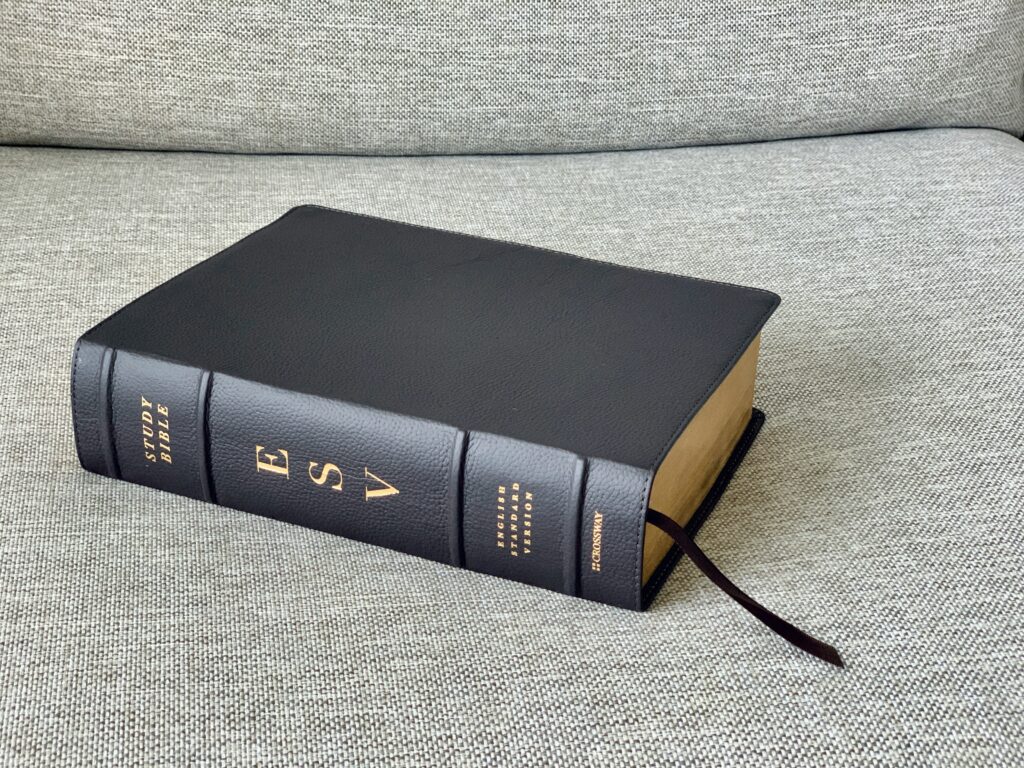
If the NKJV is my personal pick, the ESV is what I most often recommend to others — especially as a starting point.
The ESV uses an “essentially equivalent” translation philosophy: word-for-word wherever possible, with minor adjustments when strict literalism would produce confusing English. The result is probably the best balance of readability and accuracy available in a modern translation.
The English is slightly more contemporary than the NKJV, which makes it easier to hand to someone who finds older language a barrier. I personally believe in some cases it loses accuracy, but that’s rarely the case.
The ESV is also extraordinarily popular — probably the dominant Bible in the Reformed world right now. That matters for the availability of resources criterion.
The ESV Study Bible is one of the best study Bibles available. The Reformation Study Bible, edited by R.C. Sproul, is also available in ESV. Countless modern books and sermons quote from it. You’re never going to struggle to find resources that line up with your translation.
One thing worth noting: the ESV uses the Critical Text (specifically the NU text), which means it incorporates the latest manuscript scholarship. Where a verse is not found in the most reliable early manuscripts, the ESV removes it entirely rather than including it with a footnote.
That’s a notable difference from the NKJV, which includes those verses but flags the manuscript uncertainty. Neither approach is dishonest — they just reflect different convictions about how to handle textual variance.
One minor drawback: unlike the NKJV and LSB, the ESV doesn’t use italics to indicate words supplied by translators. That’s a small but real limitation for close study.
Recommended Bibles:
#3: LSB (Legacy Standard Bible)
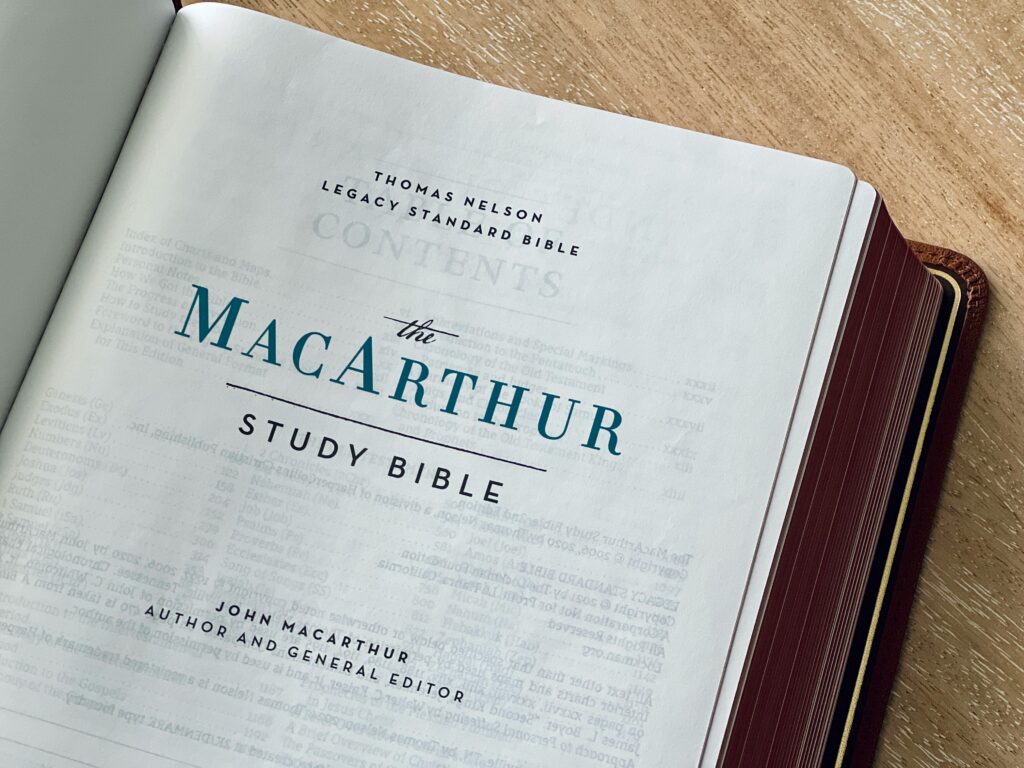
If you want precise literalness without sacrificing readability, the LSB deserves your serious attention.
The LSB is an update of the NASB95, which has long been considered one of the most literal mainstream Bible translations available. The NASB95 is still a great option today.
But the LSB irons out some of the rougher edges of the NASB while keeping that commitment to accuracy — and the result is genuinely enjoyable to read. I’ve read it, and I think the criticism that it’s awkward is overblown.
What I particularly love about the LSB is its use of italics for supplied words — just like the NKJV. Any word the translators have inserted to smooth out the English (not because it’s actually in the original text) is clearly marked.
That means you won’t become overly dogmatic about a word that’s essentially a translator’s judgment call. This is helpful not just for study, but even in casual reading — sometimes seeing the italicized word removed changes how you think about a sentence entirely.
The most distinctive feature of the LSB is its rendering of the divine name. Rather than rendering the Hebrew YHWH as “LORD” throughout the Old Testament (which is the standard approach in most English translations), the LSB uses Yahweh. If you appreciate that kind of translation precision, the LSB will appeal to you strongly.
Worth noting: the NASB95 is still a solid translation in its own right if you prefer it. The LSB and NASB2020 represent diverging traditions coming out of that same lineage. So choose based on your own preferences after comparing them.
Recommended Bibles:
#4: KJV (King James Version)

Just because I’m not King James Only doesn’t mean I think it’s a bad translation. I actually think it’s still one of the best translations available — and every serious Christian should own one, even if it isn’t their daily driver.
People often critique the KJV for inaccuracies, and yes, some exist. A well-known example is the rendering of “thou shalt not kill” rather than “thou shalt not murder” in the Decalogue — an important distinction to make.
But what critics of the KJV often miss is that early modern English, the language the KJV was written in, actually has more accurate words for some of the Greek and Hebrew vocabulary than modern English does.
Joel Beeke (increasingly one of my favourite theologians) has spoken about this. His view is that the words chosen in the KJV to render certain Greek and Hebrew terms are simply better than their modern equivalents, even if we don’t use those words much anymore. There’s a precision in the language that more contemporary translations have traded away for accessibility.
There’s also the matter of history. The KJV has been the Bible of English-speaking Protestants since the early 1600s. Reading it means you’re reading the same text that the Puritans, the Reformers’ successors, and countless saints over four centuries used.
If you’re reading older theological works — anything before roughly the 1950s — they’ll almost exclusively quote from the KJV. Familiarity with it makes those works more accessible.
And practically speaking, memorizing scripture in the KJV builds your English vocabulary. You’ll encounter words that have been lost from everyday speech but that sometimes capture the meaning of the original languages often better than anything in modern English.
Recommended Bibles:
#5: CSB (Christian Standard Bible)

I’ll be honest: I don’t personally use the CSB much. But when I have, I’ve found it genuinely helpful — and I think it could serve as a solid daily driver for certain readers.
The CSB is the most ‘readable’ translation on this list. It sits closer to the dynamic end of the spectrum than the others, without going fully there. On the criteria I laid out at the beginning, it’s the weakest of the five — but it still clears the bar.
The main reason I include it: the CSB is a strong alternative to the NIV. I no longer recommend the NIV to people, for reasons that deserve their own article (hint: feminism). If someone is looking for the kind of readability the NIV offers — something smooth and accessible — the CSB is where I’d send them instead.
It’s not perfect. The CSB still uses more gender-neutral language than I’d like, missing some of the gendered terms in the original Greek and Hebrew. But it handles this considerably better than the NIV’s 2011 revision.
And it’s growing in influence — many churches, particularly in the Southern Baptist world, are adopting it as their preaching Bible, which means resources and sermon material will increasingly line up with it.
Recommended Bibles:
A Final Word
You might have expected a translation on this list that didn’t appear. If so, it’s usually because it didn’t meet one or more of those three criteria — translation philosophy, availability of resources, and universality.
There are more literal translations than anything on this list, but they’re not practical for everyday use. There are more readable translations, but they sacrifice too much accuracy to recommend broadly.
This includes translations like:
- NIV
- NET
- NLT
- LSV
- Young’s Literal Translation
- and others
Pick one of these five. Commit to it. Use it for everything.
That’s how you build a Bible reading life that actually sticks.
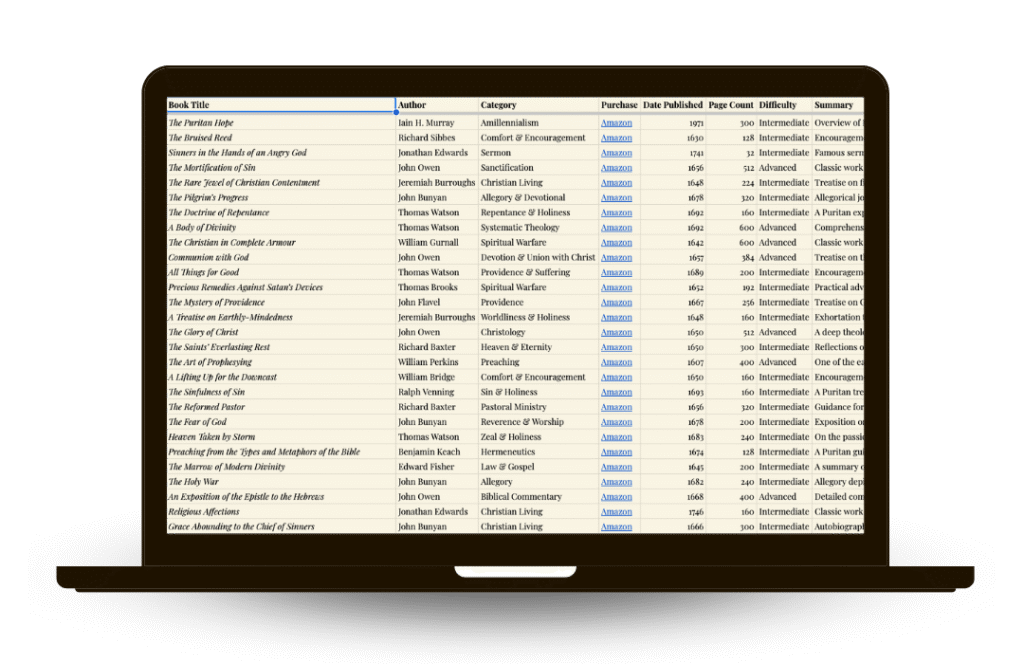
Want great theological literature to read alongside your Bible? Grab my free Ultimate Reformed Book List — over 400 curated titles with summaries, page counts, and difficulty ratings.
